When & Who
In early 2021 CANOPA was founded and one of the first things we did was get a survey out to current and former employees of the Outdoor Industry. We ran a survey through SurveyMonkey.com, recruiting people mainly through social media and asking colleagues in the outdoor industry to share it widely. We had 386 participants, whose positions ranged across guides, instructors, educators, therapists, counselors, managers, and owners. Participants were asked questions about their roles and experiences in the industry.
Why do a survey?
Stemming from a collective need for better employment standards, sustainable wages & a unified voice, we created CANOPA, a Nonprofit, community-driven association for outdoor professionals. We are a small grassroots volunteer board – A Teacher, a Social Work Student, an Office Manager, a Cook, and a University Professor, all passionate about the outdoor industry are looking to better understand the barriers instructors face in the industry.
So what will we do with this information
All of this data collected will help us support, advocate, impact & work towards creating positive changes and a more sustainable outdoor industry. Below have shared more details about what our survey results showed. Thank you to all the folks who filled out this survey!
Aim: Stemming from our own challenges and successes, we are looking to make the industry more equitable, diverse, and sustainable for employees.
Our Main Takeaways
- Why people left the industry
- What other associations are doing in the industry
- How education & certification affect employment
- What changes people want to see in the industry
What would make the industry more Sustainable for you?
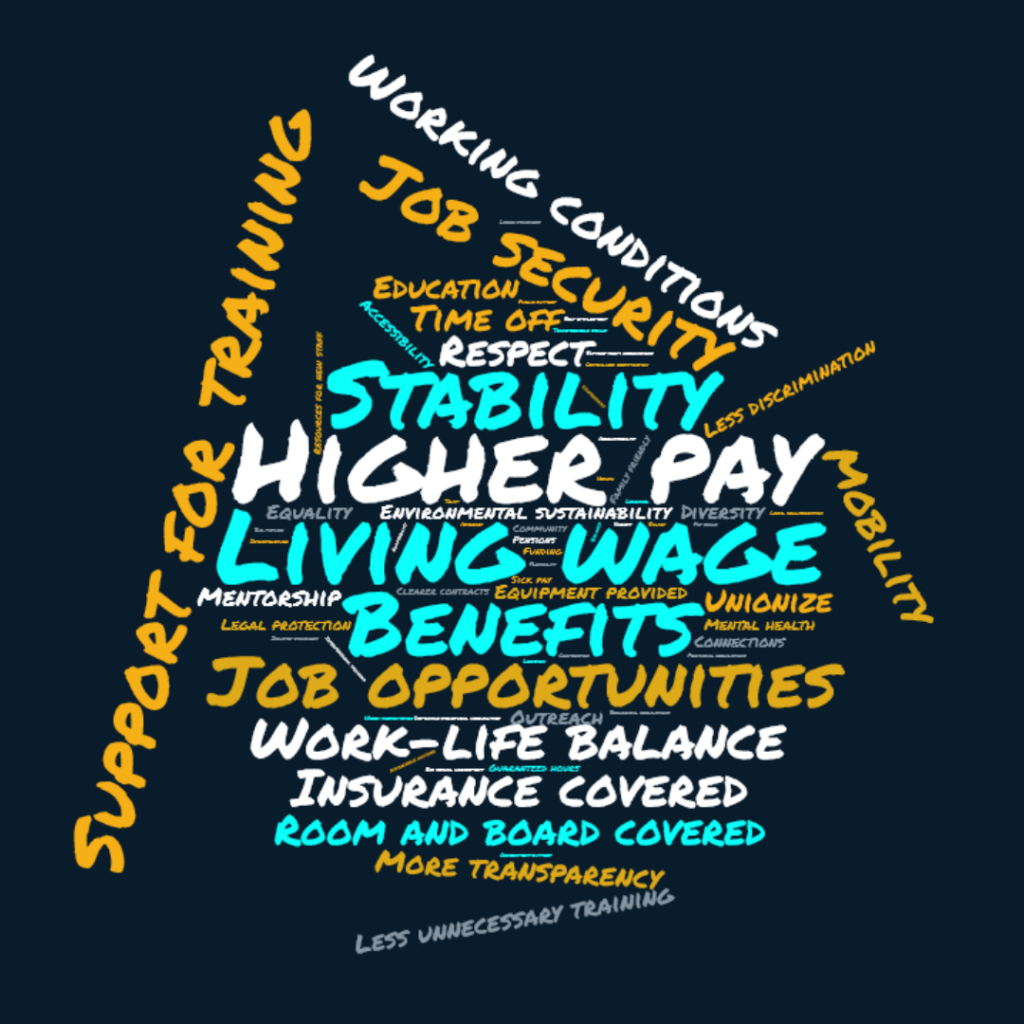
This is was a question that we left open ended for folks to answer. Some of the top themes were higher pay, living wage, benefits, stability, and job security. As sustainability is a top priority for CANOPA this information was important to gather.
What changes would you most like to see?
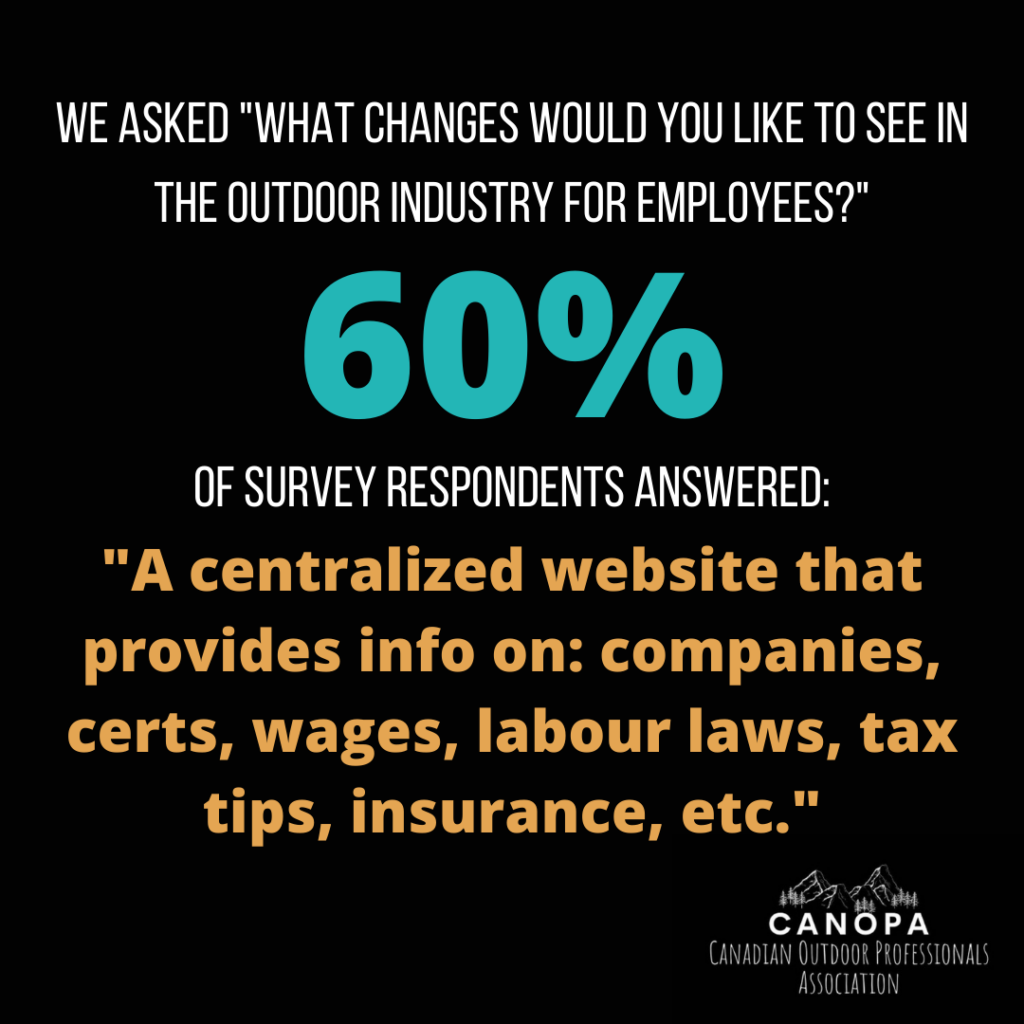
This was an option to select multiple responses. Again, ‘increased wages’ came out on top at 68%, with ‘a centralized website/wiki with information on the industry’ at 59%, and ‘a professional association/guild/union that formally advocates for instructors’ at 50%.
What do you wish you knew before starting your career?
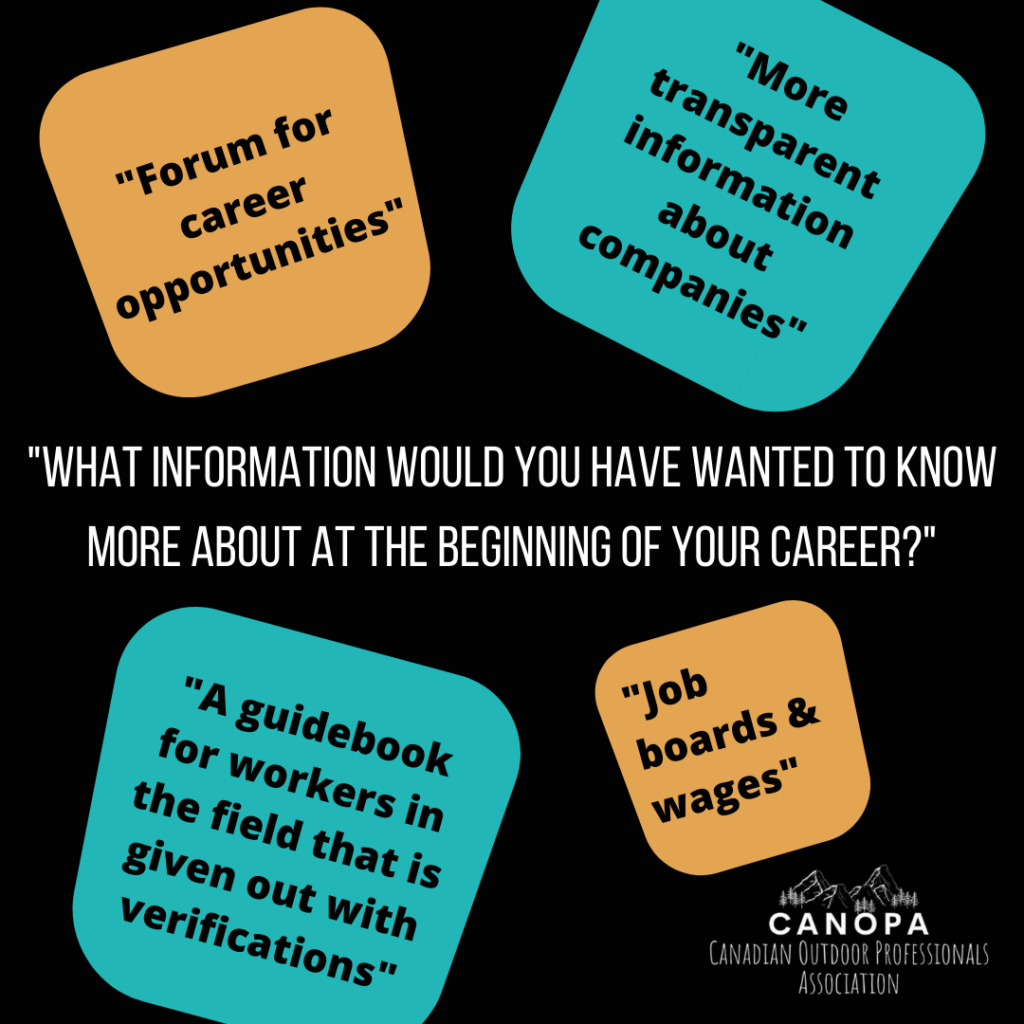
This is important to us as we move forward with the work that we are doing at CANOPA. Being able to educate and support those who are starting their outdoor professional career is an important part of what CANOPA is working towards.
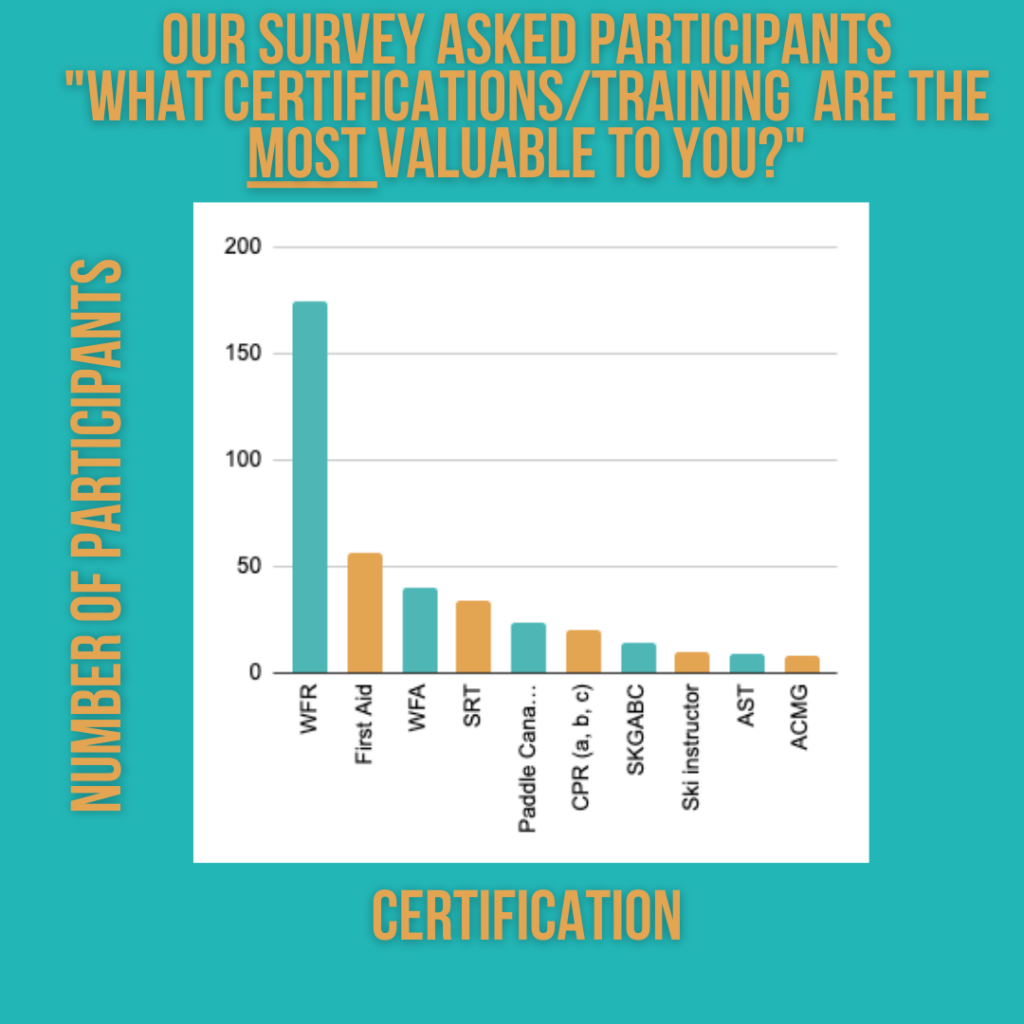
Most Valuable Certifications/ Training
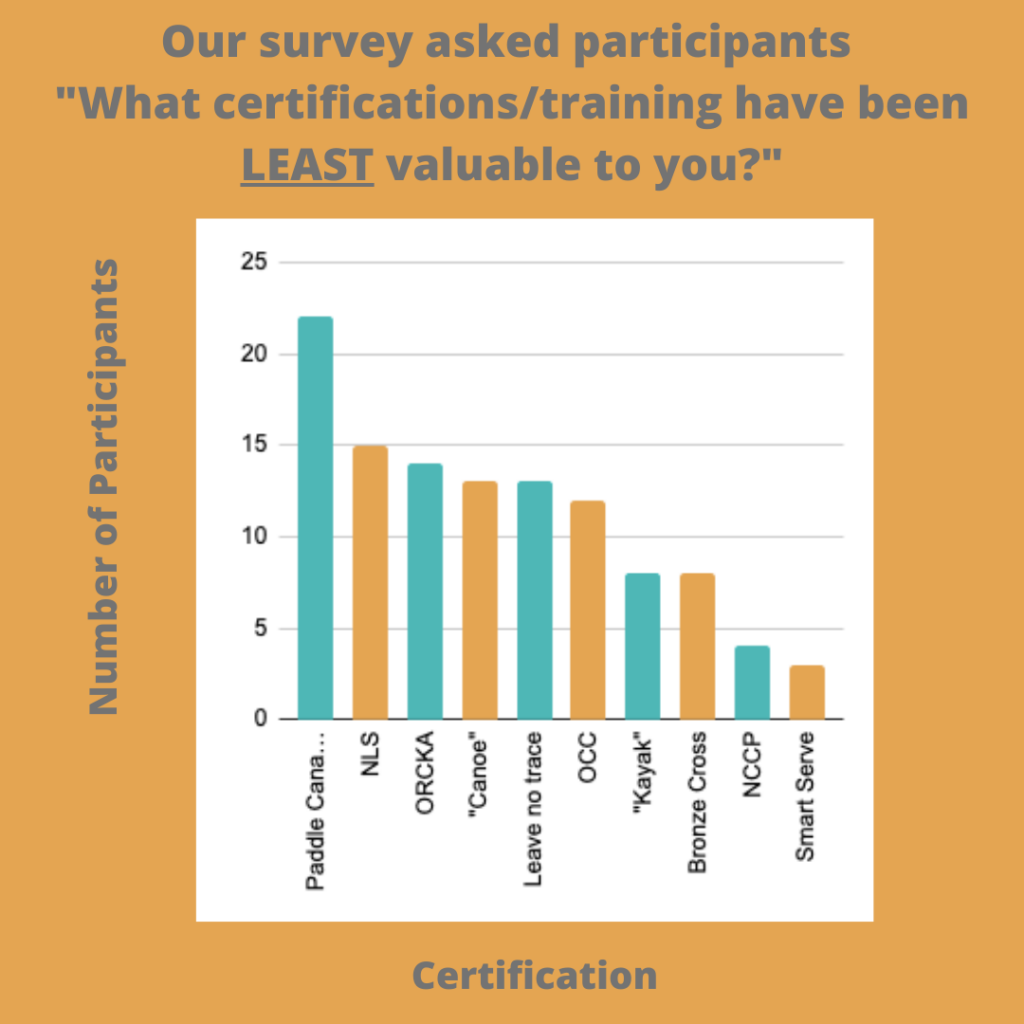
Least Valuable Certifications/ Training
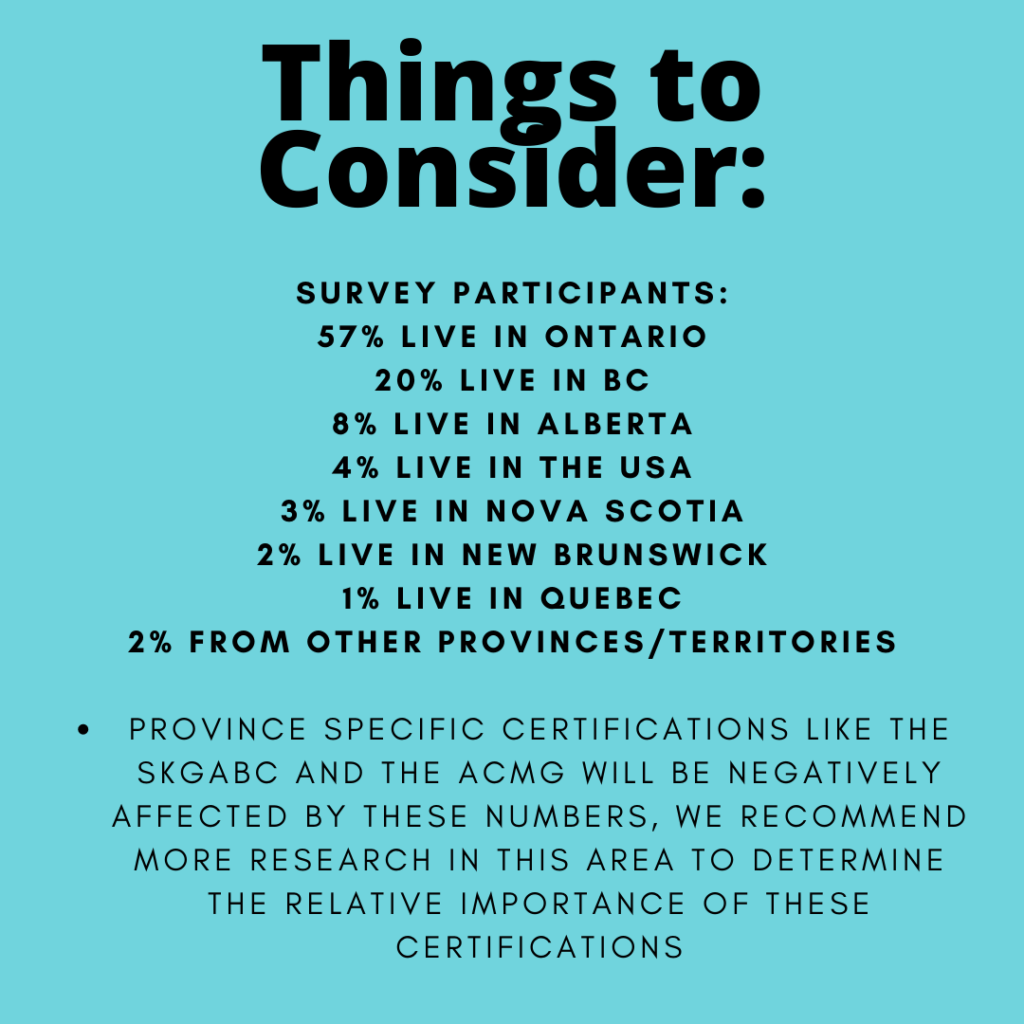
But don’t forget this when reading these results
Impact of Education
There is a big impact of education, probably as people with graduate degrees tended to be in managerial positions. It would be interesting to know more about what education level people had when entering the industry and what position they entered at. It’s possible that there is an invisible “tiered system” where people entering the industry from high school or college are slow to progress while those who enter from a Masters or other graduate degree start at a higher rung with more opportunities to advance. While managers and owners had a similar proportion of higher education to other positions, there were very few managers and owners who finished their education at high school.
Impact of Gender
We didn’t find any variation in salary by gender or whether the participant identified as a historically excluded minority, although given that gender and ethnicity pay gaps tend to be 1-20% depending on sectors, the way that we lumped salary into categories may not have been best suited to pick up on this difference. Indeed, our data tended towards significance for differences in pay by gender, so a more accurate dataset may well reveal a gender pay gap.
We did find that the gender distribution changed significantly when comparing managers and owners (62% men, 33% women, 2% nonbinary, 3% did not disclose) to other positions (55% women, 40% men, 2% nonbinary, 3% did not disclose). It seems that historically, women have had less mobility in the industry, something that now needs to be addressed.
Why Do People Leave
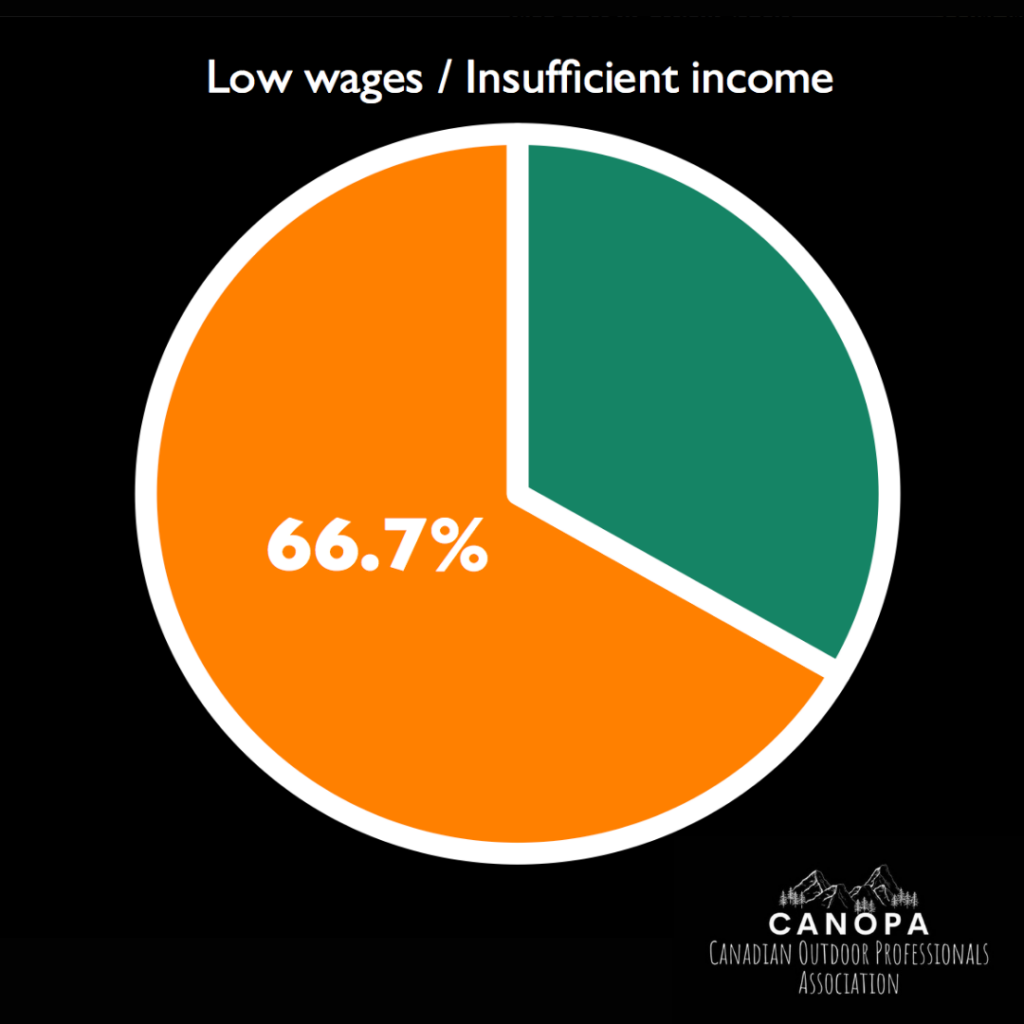
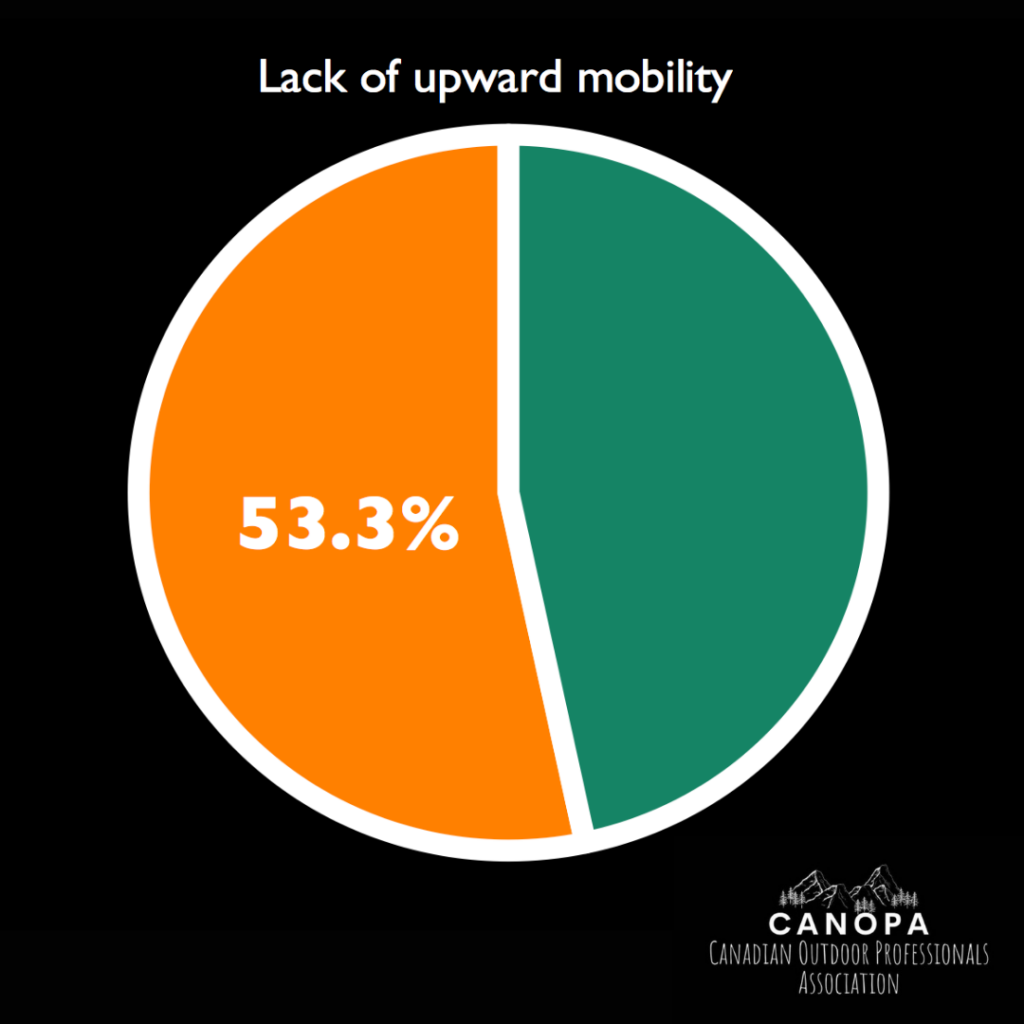
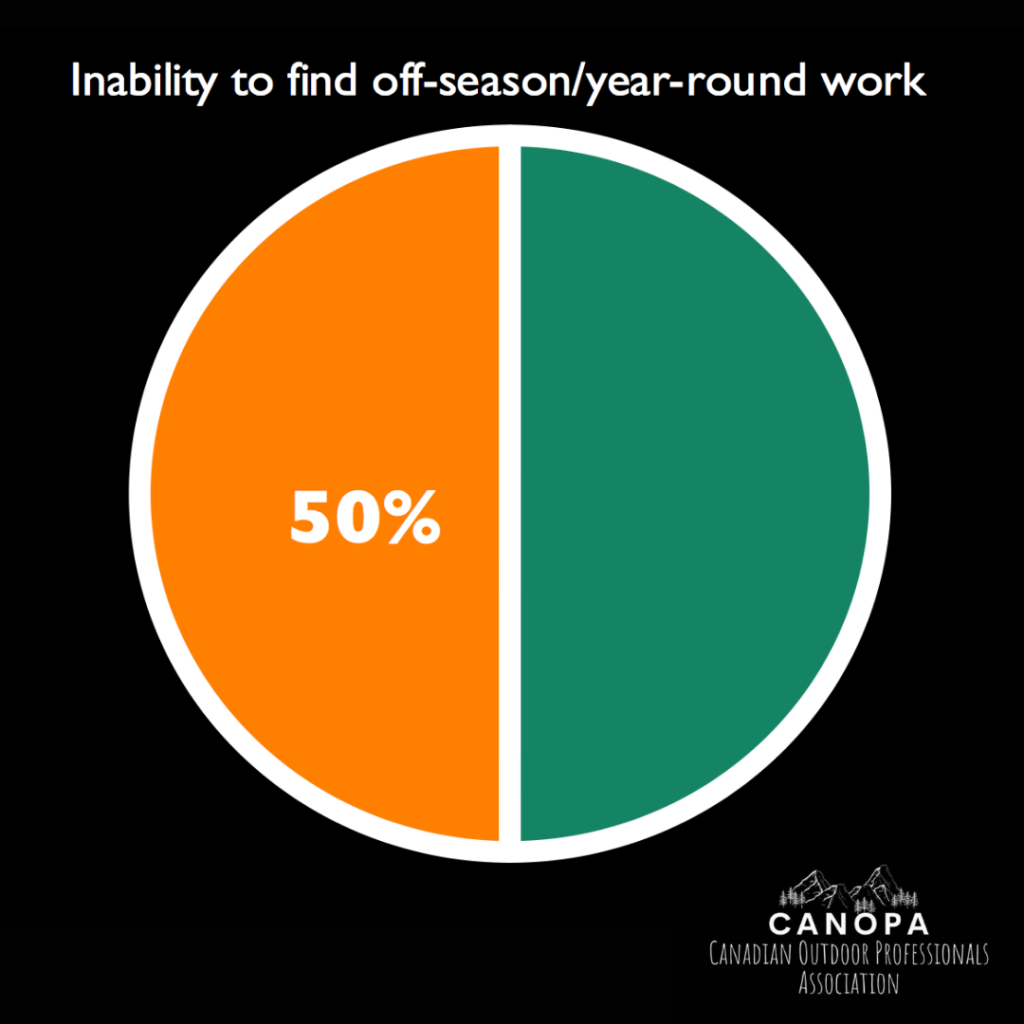
One major thing we wanted to know was why people had left the industry, so we filtered out participants to individuals who had left, leaving 58 people. When asked why they left in a multiple choice question (with a free text option as well), the three most common answers were: (1) “Low wages/insufficient income” at 69%, (2) “Inability to find off season work/year round work” at 47%, and (3) “Lack of upward mobility” at 45%.
So where does that leave the current professionals
Since pay seemed to play a key role in people leaving the industry, we then wanted to know what affects pay. We looked at all participants who shared their current salary (296 people). As expected, salary changed significantly with age and number of years’ experience, which themselves are intrinsically correlated. If people need more years’ experience in the industry to receive a living wage, people may be getting squeezed out of the industry early on, even making the decision not to enter the industry in the first place.
We were also interested – if pay and job (in)security are so important for keeping people in the outdoor industry then what are associations doing about it? We asked people (all 386 participants) what they get from their current associations. The three most common answers were: (1) “Standardized training/ certification” at 60%, (2) “Community” at 51%, and (3) “Pro deals” at 49%. Only 3% of participants said that their associations helped to negotiate salaries, despite “low income” being the top reason that our participants stated for leaving the industry. It seems that advocacy on behalf of members is not common among outdoors associations, despite glaring problems in working conditions for those members.